Artists

David Newbury

(1925 – 2003)


It is necessary for an artist to realise
that there are many truths, that there
is not one clear road along which all
must travel to a common goal.

Nevertheless the artist must endeavour
to be himself, to find his own road,
to find his own truth
.*


Metropolis Gallery is proud to present a major survey of paintings by David Newbury, exploring the artist’s journey from late 1950’s abstraction through four decades of impressionist paintings until 1997, when David’s final works were created on his last trip to Venice. This exhibition comprises works sourced from both his estate and private collections, with many of the paintings having never been exhibited, and the majority will be available for purchase.

David Newbury was born in Eltham in 1925, the son of important Melbourne artist A.E. Newbury. He studied painting after World War 2 at RMIT and taught there from 1955 - 59, followed by Bendigo Teachers College 1959 - 61 and Melbourne Teachers College 1962 - 83. Among his students were Robert Jacks, Peter Smales and Gareth Sansom.

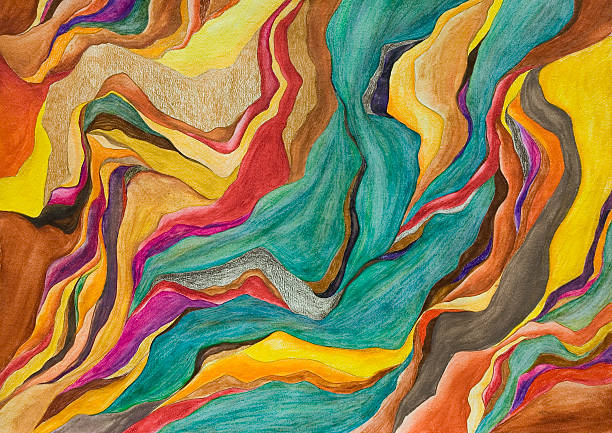
From about 1960 David exhibited large abstract and semi-abstract paintings at the Argus Gallery and Leveson Street Gallery in Melbourne and Barry Stern Galleries in Sydney. The Newbury’s were living in Eltham at that time and Barry Stern stated in his gallery’s invitation to David’s exhibition that… David Newbury’s sensitively painted abstractions of his peaceful surroundings reflect the spirit of this painter – his sincere love of the soil – the turning of a season and all manner of wondrous nuances of nature which city dwellers obscure in the hustle of a city.**

David exhibited impressionist paintings at Leveson Street Gallery in the 1970’s and as a member of the Victorian Artists Society and the Twenty Melbourne Painters during the 1980’s. He retired in 1982 and the Newburys moved to Geelong in 1988 - closer to the coast he loved. He exhibited regularly at Melaleuca Gallery, Anglesea for ten years from the late 1980’s where he achieved much success, notably with paintings of Venice and the coast and hinterland near Aireys Inlet.

So why did David Newbury make the big change in artistic direction from abstraction to impressionism?
While still living in Eltham, David and Clare built a small holiday house in 1967 at Moggs Creek, near Aireys Inlet. They had already been holidaying there every year since 1957, and after his early pursuit of abstraction, the changing atmospheric conditions where the land meets the sea may have literally been a ‘breath of fresh air’ to Newbury: an invigorating environment to which he could repeatedly return and challenge himself to ‘get it right’. Perhaps it was a calling from Amphitrite, goddess of the sea, painted by David in 1962.

You must capture change. One day the landscape is violet, another it’s bluer, or it has pinkness, its darker or lighter. Things change in front of you
.***

A number of artists gravitated to these coastal villages in that period, and it was the norm for David to go painting regularly with artists Bill Harding and the very supportive David Keys. Other artists and friends who joined them at times were William Frater, Charles Bush, Max Sherlock, John Borrack and Ray Woods.

You probably think landscape painters are those who go out into nature and paint on the spot. That is how I see it too. However as a painter, you are subject to every possible hazard. The landscape is at its best when the light is about to change so you are at the absolute mercy of the weather, the mosquitoes, the flies and the heat but the worst hazard of all, no matter how careful you are to avoid them, is onlookers!

The opening approach is always, ‘Are you doing a painting?’ You mutter something politely and then they say: ‘Do you sell them or do you do it for a hobby?’ From then on you get various comments such as, ‘Look what he’s doing there, he’s doing a seascape and, look what he’s mixing, that’s subtle: that’s turquoise. That’s the same colour as our trailer.
***

Last year when I first spoke with Clare Newbury about David’s career, we inevitably discussed the ups and downs of his exhibition history and of the many successful shows that followed a dedicated time painting outdoors. Apparently David insisted that an exhibition should contain no more than twenty eight paintings. We began opening cupboards and drawers containing paintings that span five decades of the artist’s life work and it was exciting to find many that have never been exhibited, and early works which haven’t been seen for over four decades. I quickly looked for ways to explain to Clare that we would need just a few more than twenty eight pictures to tell a thousand words!

David Newbury passed away in 2003 leaving a wonderful legacy of paintings. Artists make art because it needs to be made and if their paintings are auto-biographical, then this exciting collection not only reflects Newbury’s early struggle to find his genre, but also his life as a family man, art educator, world traveller and importantly his over-riding creative relationship with the coastline near Aireys Inlet.

David Newbury is represented in collections of the Melbourne State College, Burwood, Frankston, Melbourne and Toorak, and private collections in Australia and the USA.


* David Newbury quoted in a 1960 exhibition catalogue: Peter Clarke, Arch Cuthbertson and David Newbury
at Gallery A, Melbourne.
** Barry Stern from invitation to An Exhibition of Paintings by David Newbury at Barry Stern Galleries, Sydney.
*** David Newbury from notes for an artrist talk given at Mitre Tavern c. 1985.


Robert Avitabile
Metropolis Gallery
April 2010